
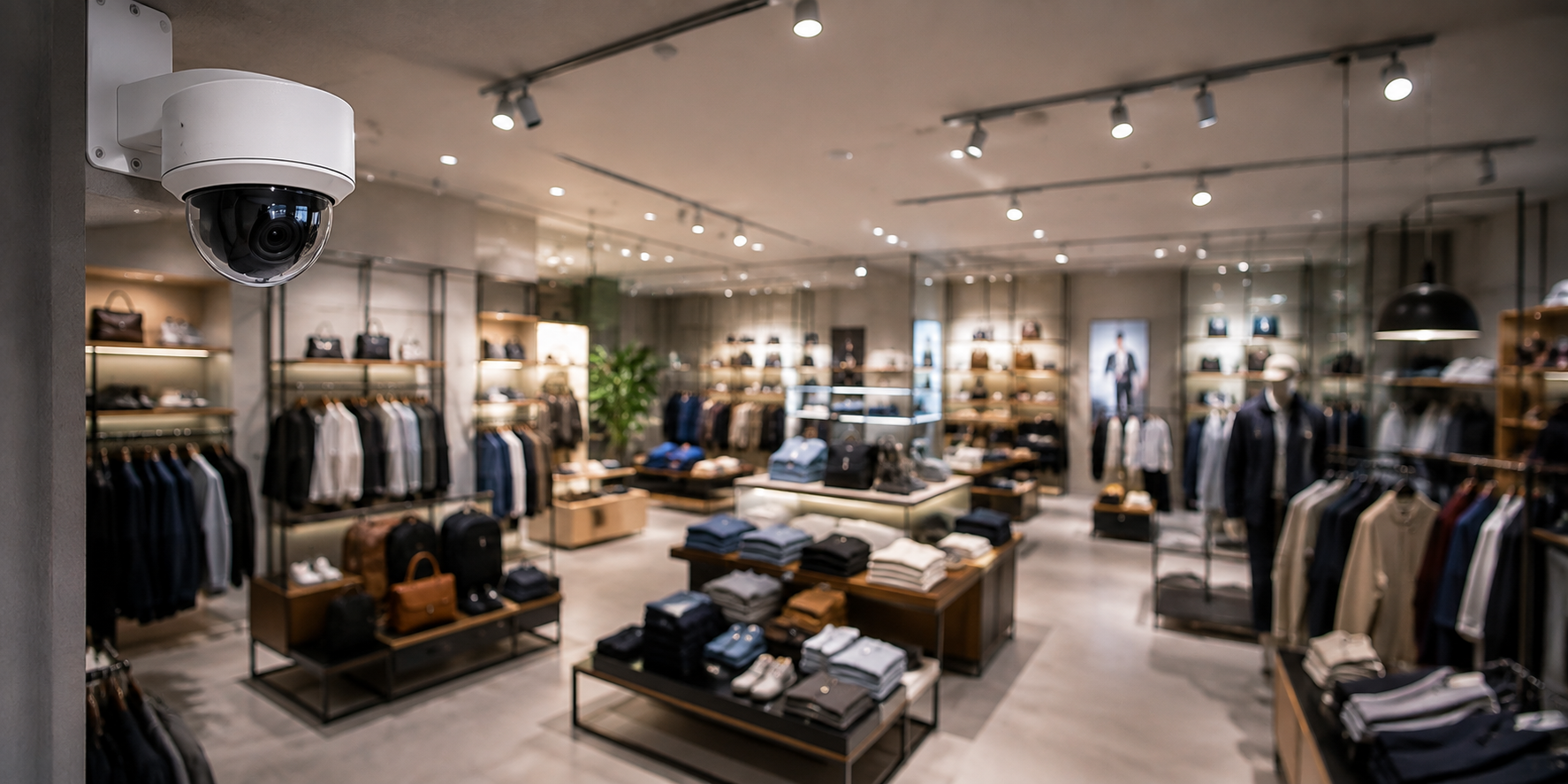
Retail stores operate in an open and customer-friendly environment where large numbers of shoppers, employees, suppliers, and merchandise move throughout the premises every day. While accessibility is essential for a positive shopping experience, it can also expose retailers to security risks such as shoplifting, employee theft, fraudulent transactions, and unauthorised access to restricted areas. These losses, commonly referred to as retail shrinkage, can gradually reduce profitability and create discrepancies between physical inventory and sales records. An effective retail security strategy combines CCTV surveillance, Electronic Article Surveillance (EAS), access control, and proper staff procedures to provide better visibility across the store. By monitoring critical areas and controlling access to sensitive locations, retailers can reduce preventable losses while maintaining a safe and welcoming shopping environment for customers.
Common Security Issues
Retail businesses face security challenges from both external and internal sources. Shoplifting is one of the most common concerns, particularly in stores where products are displayed openly and customers can move freely between aisles. Small, portable, or high-value merchandise can be especially vulnerable when display areas contain blind spots or are not adequately monitored.
Internal theft can also contribute to retail losses. Employees may misuse their access to cash, merchandise, storerooms, or inventory systems, resulting in missing stock or unexplained cash shortages. Without reliable surveillance and proper operational controls, identifying when and where these incidents occurred can be difficult.
Checkout counters are another important area to monitor because fraudulent transactions, unauthorised discounts, suspicious refunds, or incorrect transaction handling can lead to financial losses. Disputes between customers and employees may also require recorded footage to establish what happened during a transaction.
Restricted locations such as stockrooms, cash offices, management rooms, and inventory storage areas present additional risks when access is not properly controlled. Unauthorised individuals entering these areas may gain access to valuable merchandise, cash, or sensitive business information. Together, these risks make a comprehensive security strategy essential for reducing shrinkage and improving accountability throughout retail operations.
Recommended Solutions
An effective retail security system should provide clear surveillance of both customer-facing and restricted areas while supporting stronger inventory and access management. High-resolution CCTV cameras should be positioned strategically throughout entrances, exits, display areas, aisles, checkout counters, and other important locations. Dedicated cameras installed above or around POS counters can provide a clear view of transactions, helping management review payment disputes, suspicious refunds, cash-handling issues, and other incidents.
Camera placement should also minimise blind spots and provide unobstructed coverage throughout merchandise display areas. For products that are particularly valuable or vulnerable to theft, Electronic Article Surveillance (EAS) tags can provide an additional layer of protection by triggering an alert when tagged merchandise passes through detection gates without being properly deactivated or removed.
Access control should be installed at stockrooms, cash offices, management rooms, and other restricted areas so that only authorised employees can enter. Access records can also improve accountability by showing when authorised personnel entered specific locations. Technology should be supported by proper staff procedures as well. Employees should be trained to recognise suspicious behaviour, respond appropriately to potential incidents, follow correct cash-handling procedures, and report security concerns. Combining technology with well-trained staff creates a stronger loss-prevention strategy without disrupting the customer experience.